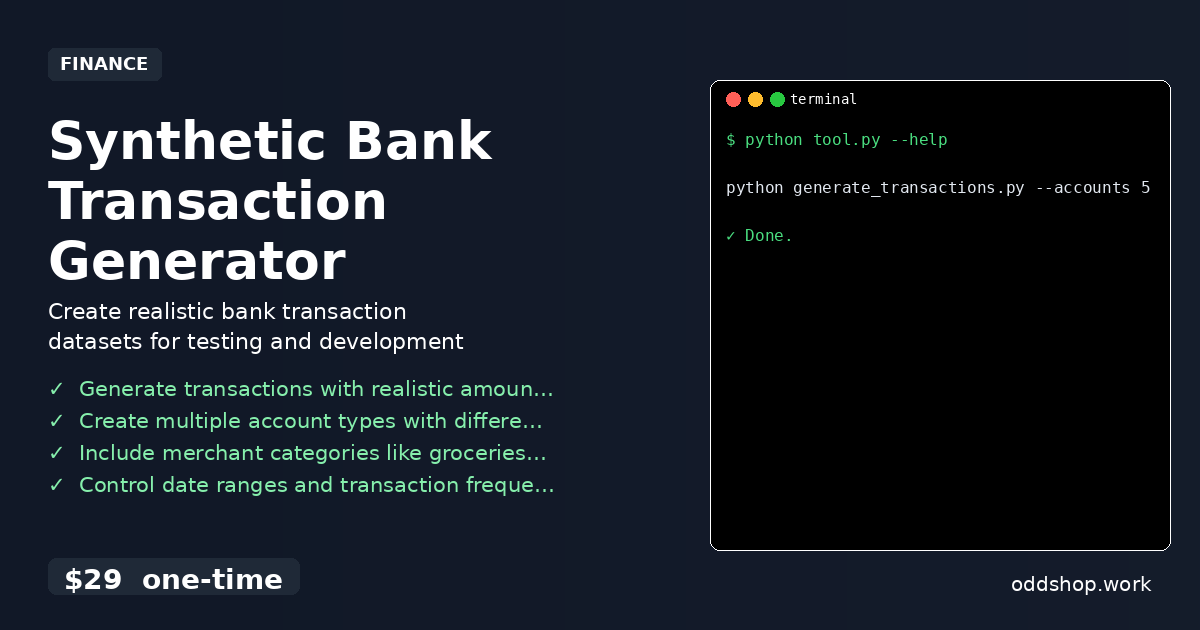
How to Generate Synthetic Bank Transaction Data with Python

python bank data often comes with a steep learning curve when you’re trying to build tools or prototypes that need realistic financial information. If you’re not working with real bank records, creating synthetic data manually is one of the most tedious steps in any data project. It’s easy to get lost in spreadsheets, formulas, and countless clicks. The Manual Way (And Why It Breaks) Manually creating transaction data for a Python project can take hours....
<span title='2026-03-20 23:14:56 +0000 UTC'>March 20, 2026</span>&nbsp;·&nbsp;OddShop

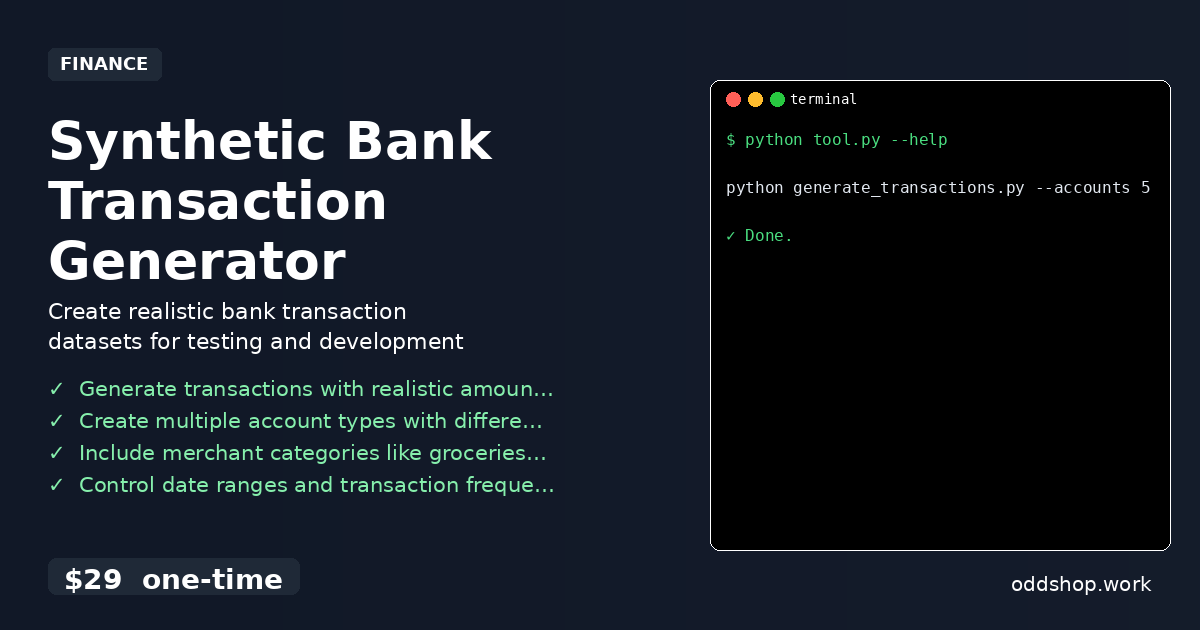
How to Automate Synthetic Bank Transaction Generator with Python

Generating realistic bank transaction data for testing financial applications is a persistent pain point for developers. A bank transaction generator that can produce synthetic records with appropriate spending patterns and merchant types is essential—but building one from scratch is time-consuming. Manual approaches often lead to poor-quality test data, breaking application logic or masking real issues. When dealing with financial data generation, small inconsistencies can cause big problems down the line....

<span title='2026-03-20 19:30:56 +0000 UTC'>March 20, 2026</span>&nbsp;·&nbsp;OddShop