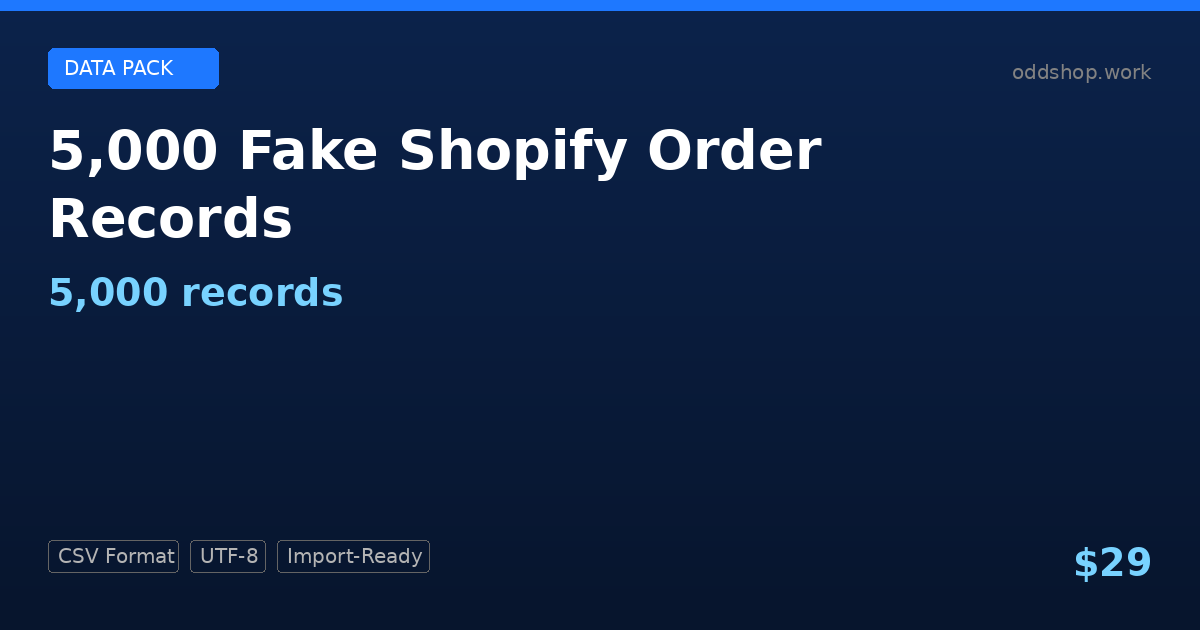
What's in the 5,000 Fake Shopify Order Records: A 5,000-Record CSV Dataset

What’s in This Dataset This dataset includes 5,000 realistic fake Shopify order records in CSV format, designed to mirror real-world export data from Shopify. Each record contains essential fields like order_id, customer_email, customer_name, product_name, sku, price, discount_amount, shipping_address, order_status, and order_date. The structure matches actual Shopify CSV exports, making it ideal for testing tools and systems that expect real data formats. With columns covering everything from transactional details to customer demographics, this dataset offers a complete snapshot of e-commerce activity for development and analysis....

<span title='2026-03-21 09:31:01 +0000 UTC'>March 21, 2026</span>&nbsp;·&nbsp;OddShop

How to Generate Fake Shopify Order Data with Python

Generating python fake order data manually is time-consuming and error-prone. It’s especially frustrating when you need realistic test data to validate a Shopify app or run integration tests. Manually crafting records with fake customer names, product details, and order statuses takes hours and rarely feels accurate. Tools like the python faker library help, but for Shopify-specific workflows, a dedicated order generator is more practical. The Manual Way (And Why It Breaks) Creating test data for your Shopify app by hand involves copying and pasting rows, adjusting timestamps, and generating unique IDs....

<span title='2026-03-20 19:22:35 +0000 UTC'>March 20, 2026</span>&nbsp;·&nbsp;OddShop
Fake Shopify Order Data Generator

Fake Shopify Order Data Generator

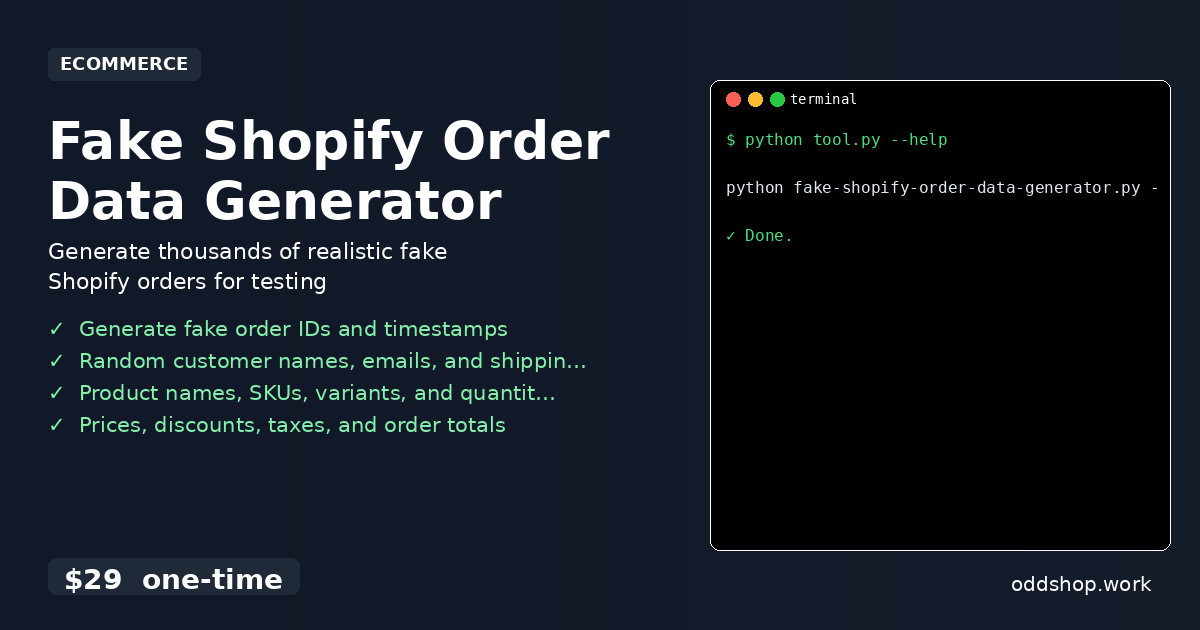
Generates realistic fake Shopify order records as CSV for app testing. Creates order data with customer info, product names, SKUs, quantities, prices, and order status using only Python standard library. Features Generate fake order IDs and timestamps Random customer names, emails, and shipping addresses Product names, SKUs, variants, and quantities Prices, discounts, taxes, and order totals Order status distribution (fulfilled, pending, refunded) Configurable record count via –records argument Usage python fake-shopify-order-data-generator....

<span title='2026-03-20 00:00:00 +0000 UTC'>March 20, 2026</span>&nbsp;·&nbsp;OddShop
Fake Shopify Order Data Generator

New Tool: Fake Shopify Order Data Generator

We just released Fake Shopify Order Data Generator — generate thousands of realistic fake shopify orders for testing. What it does Generates realistic fake Shopify order records as CSV for app testing. Creates order data with customer info, product names, SKUs, quantities, prices, and order status using only Python standard library. Features Generate fake order IDs and timestamps Random customer names, emails, and shipping addresses Product names, SKUs, variants, and quantities Prices, discounts, taxes, and order totals Order status distribution (fulfilled, pending, refunded) Configurable record count via –records argument Usage python fake-shopify-order-data-generator....

<span title='2026-03-20 00:00:00 +0000 UTC'>March 20, 2026</span>&nbsp;·&nbsp;OddShop
Ecommerce Process Audit CLI

Ecommerce Process Audit CLI

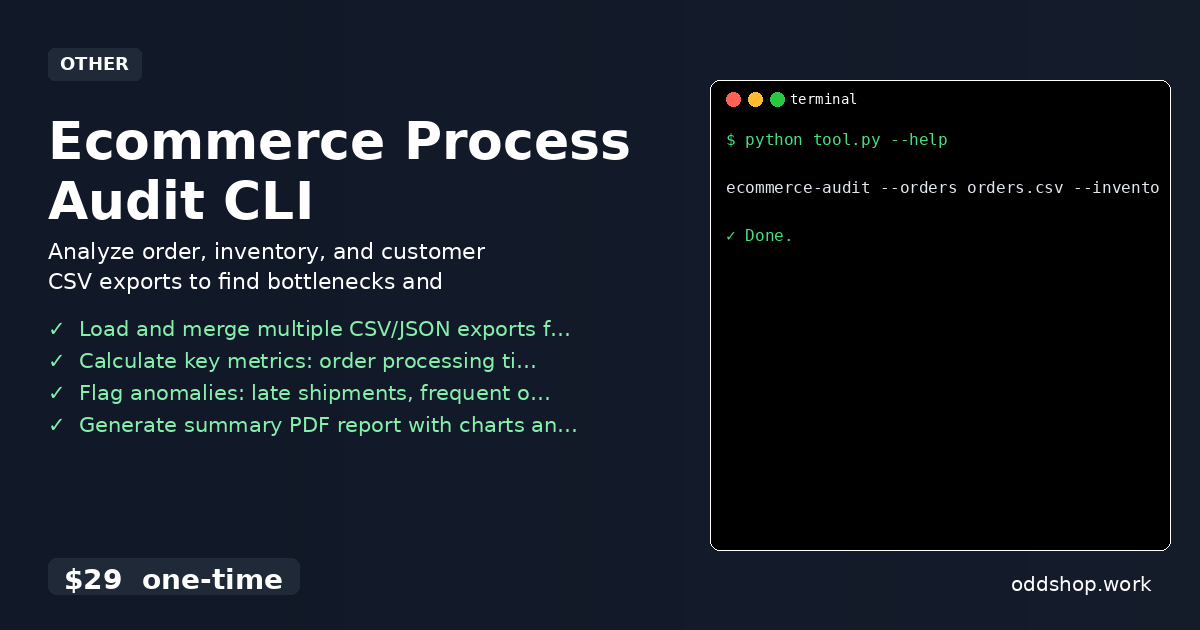
This tool reads your exported ecommerce data (orders, inventory, customers) and identifies process inefficiencies like fulfillment delays, stockouts, and customer churn patterns. It’s for Python developers managing small to mid-sized online stores who want data-driven insights before buying more tools. The key benefit is a clear report showing where to fix your operations first. Features Load and merge multiple CSV/JSON exports from platforms like Shopify or WooCommerce Calculate key metrics: order processing time, inventory turnover, repeat purchase rate Flag anomalies: late shipments, frequent out-of-stock items, high-return customers Generate summary PDF report with charts and prioritized action items Export analysis results to JSON for integration with other systems Usage ecommerce-audit --orders orders....

<span title='2026-03-17 00:00:00 +0000 UTC'>March 17, 2026</span>&nbsp;·&nbsp;OddShop
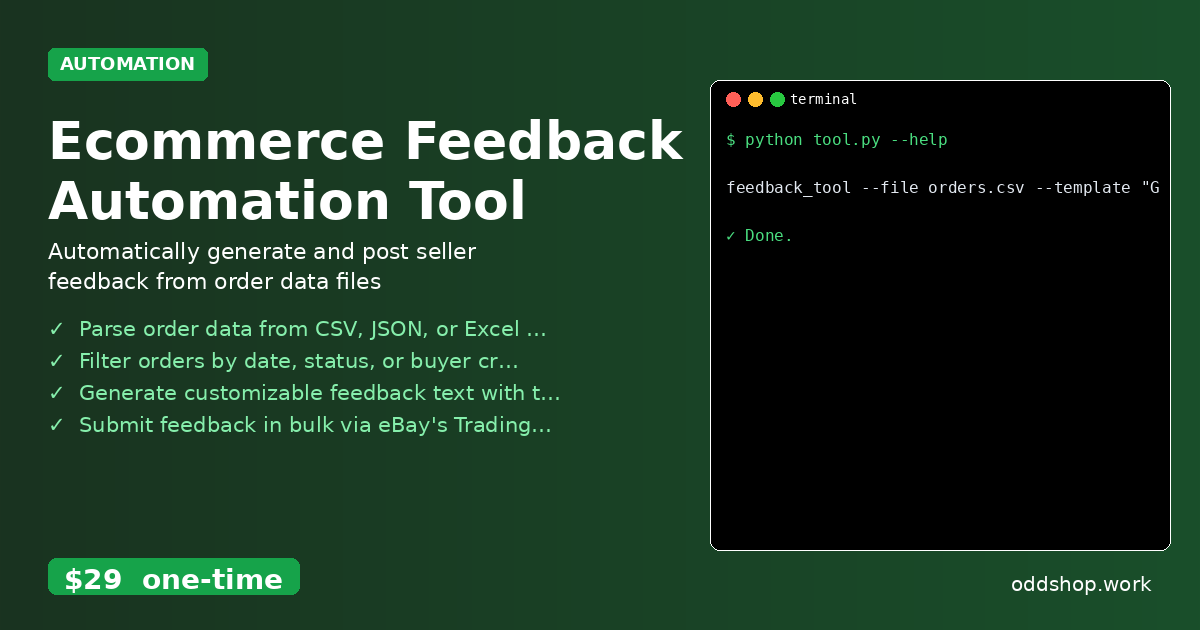
Ecommerce Feedback Automation Tool

Ecommerce Feedback Automation Tool

This tool reads exported order data (CSV/JSON) and automatically posts positive feedback for buyers. It’s for eBay sellers who want to save time on manual feedback. Works with eBay’s API using a simple token. Features Parse order data from CSV, JSON, or Excel files Filter orders by date, status, or buyer criteria Generate customizable feedback text with templates Submit feedback in bulk via eBay’s Trading API Log results and errors to a local file for review Usage feedback_tool --file orders....

<span title='2026-03-16 00:00:00 +0000 UTC'>March 16, 2026</span>&nbsp;·&nbsp;OddShop
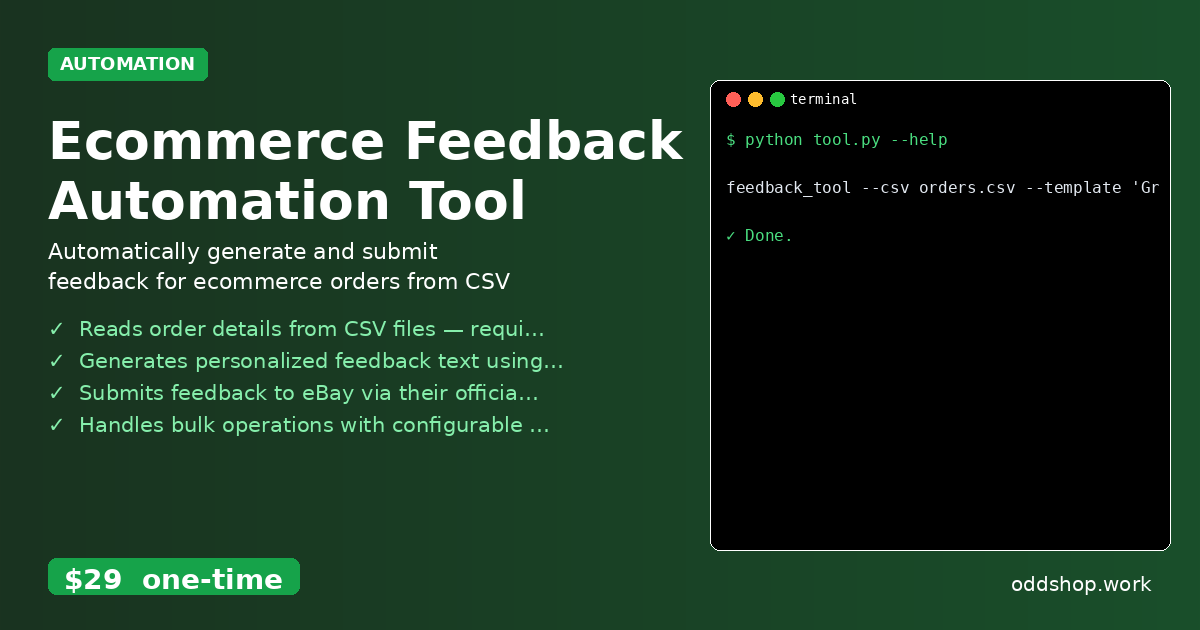
Ecommerce Feedback Automation Tool

Ecommerce Feedback Automation Tool

This tool reads order data from a CSV file and automatically generates personalized feedback for each transaction. It’s for eBay sellers who want to save time on repetitive feedback tasks. It works with eBay’s API using a simple token. Features Reads order details from CSV files — requires order ID, buyer username, and item title Generates personalized feedback text using customizable templates Submits feedback to eBay via their official Sell Fulfillment API Handles bulk operations with configurable delays to respect rate limits Logs all actions and results to a local file for audit Usage feedback_tool --csv orders....

<span title='2026-03-16 00:00:00 +0000 UTC'>March 16, 2026</span>&nbsp;·&nbsp;OddShop
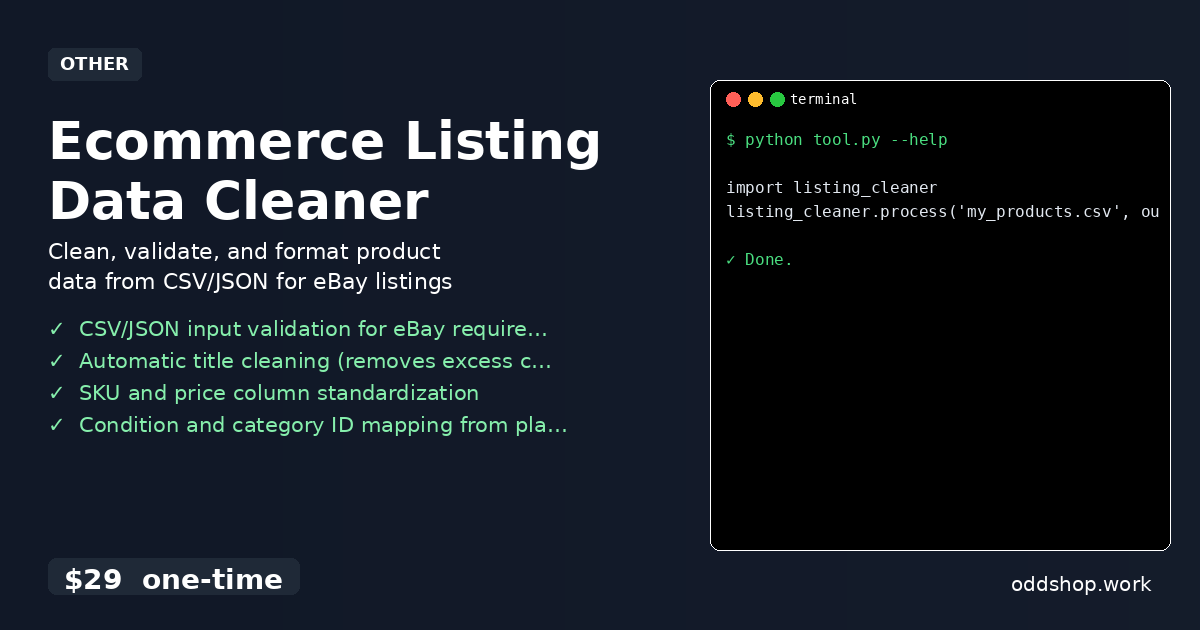
Ecommerce Listing Data Cleaner

Ecommerce Listing Data Cleaner

A Python CLI tool for eBay sellers who export their inventory data. It cleans messy product titles, validates required fields, and formats data to meet eBay’s listing requirements, saving hours of manual editing. Works with data exported from any platform. Features CSV/JSON input validation for eBay required fields Automatic title cleaning (removes excess caps, fixes spacing) SKU and price column standardization Condition and category ID mapping from plain text Export to eBay-ready CSV or formatted JSON Usage import listing_cleaner listing_cleaner....

<span title='2026-03-16 00:00:00 +0000 UTC'>March 16, 2026</span>&nbsp;·&nbsp;OddShop
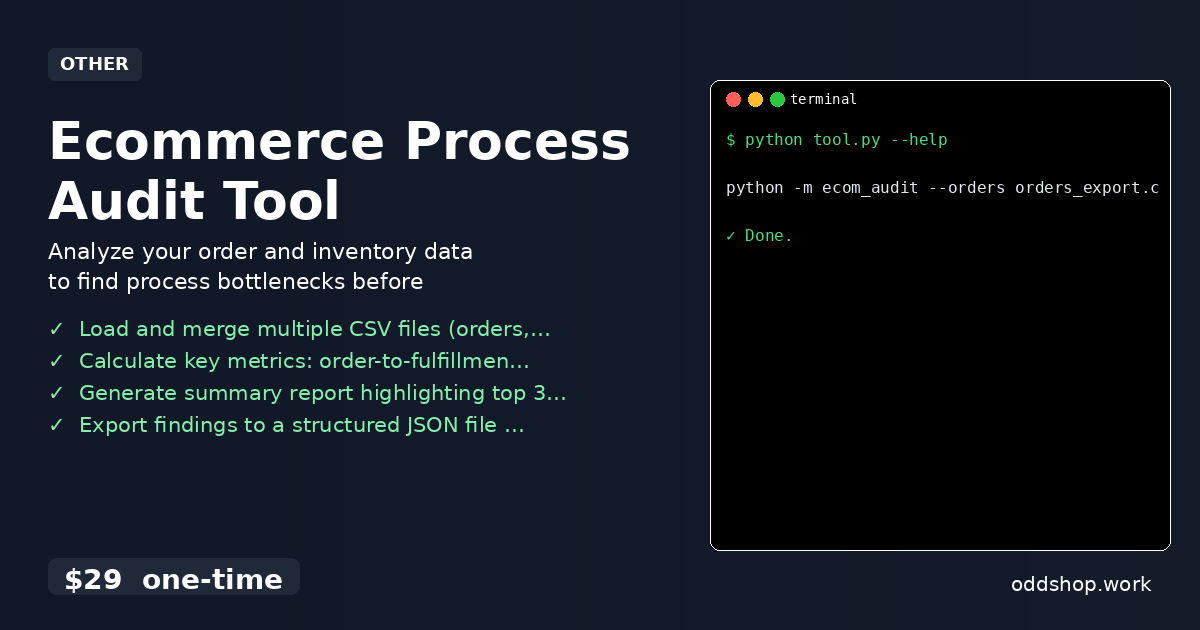
Ecommerce Process Audit Tool

Ecommerce Process Audit Tool

This tool reads exported order and inventory CSVs from any ecommerce platform and identifies common process failures like fulfillment delays, stockout patterns, and refund clusters. It’s for Python developers managing small to mid-sized ecommerce operations who need data-driven insights to fix their core workflow before investing in new software. Features Load and merge multiple CSV files (orders, inventory, refunds) Calculate key metrics: order-to-fulfillment delay, stockout frequency, refund rate by product Generate summary report highlighting top 3 process bottlenecks Export findings to a structured JSON file for further analysis Command-line interface with configurable date ranges and filters Usage python -m ecom_audit --orders orders_export....

<span title='2026-03-16 00:00:00 +0000 UTC'>March 16, 2026</span>&nbsp;·&nbsp;OddShop
Ecommerce Profit Margin Calculator

Ecommerce Profit Margin Calculator

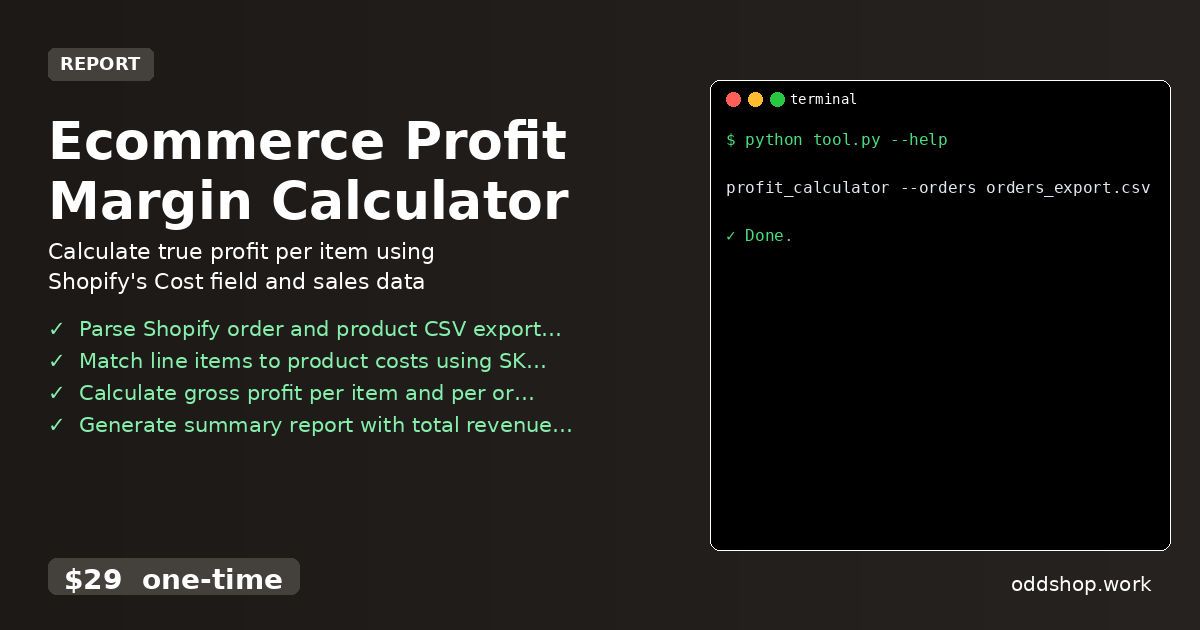
This tool analyzes Shopify order exports and product data to calculate real profit margins. It’s for merchants who use Shopify’s ‘Cost per item’ field but lack consolidated profit reports. It turns raw CSV exports into a clear profit summary. Features Parse Shopify order and product CSV exports Match line items to product costs using SKU or variant ID Calculate gross profit per item and per order Generate summary report with total revenue, cost, and profit Export results to a formatted CSV or JSON file Usage profit_calculator --orders orders_export....

<span title='2026-03-16 00:00:00 +0000 UTC'>March 16, 2026</span>&nbsp;·&nbsp;OddShop

Shopify Product Sync Tool

Keep your Shopify product catalog in sync automatically. No more manual copy-paste between stores, no more mismatched inventory. What it does Pulls product data from your Shopify store via API Compares against a local JSON file or secondary store Updates only what has changed — skips unchanged products Logs every change with timestamp and product ID Runs on a schedule or on-demand Requirements Python 3.8+ A Shopify store with API access requests library (pip install requests) Usage python shopify_product_sync....

<span title='2026-03-07 00:00:00 +0000 UTC'>March 7, 2026</span>&nbsp;·&nbsp;OddShop